
Better Tire Angles Help Your Car Turn More Smoothly and Feel More Stable
How alignment improves steering response comes down to one simple idea. When your wheels point in the right direction, your steering feels quicker, smoother, and easier to control. If the angles are off, your car may pull, feel loose, or react slowly when you turn the wheel. In Oxnard, CA, that can make daily driving less comfortable and less predictable, especially on rough roads or after hitting potholes.

Quick answer
Steering response gets better when wheel alignment puts each wheel at the proper angle. That helps your tires grip the road evenly. It also helps the steering wheel return to center more naturally after a turn. A car with good alignment often feels more direct. A car with poor alignment can feel delayed, shaky, or harder to keep straight.
This is part of regular auto service, even though many drivers wait until a problem shows up. Small alignment changes can affect how your car handles long before the tires look badly worn.
What you need before starting
Before you think about alignment, it helps to know what can affect steering feel. A full check should include more than just the wheel angles. Tires, suspension parts, and steering parts all play a part. If one item is worn out, alignment alone may not fix the issue.
- Tire pressure should match the vehicle’s recommended level
- Tires should have even tread and no major damage
- Suspension parts should not be loose or bent
- Steering parts should move properly
- The car should sit level on the ground
If your car has recently hit a curb, deep pothole, or road debris, that is also useful to know. Those impacts can knock things out of place very fast.
Step-by-step process
A professional alignment follows a clear process. The goal is to measure the current wheel angles and adjust them back to factory specs. Here is how that usually works.
- The technician checks tire condition and pressure.
- The steering and suspension parts are inspected for wear or damage.
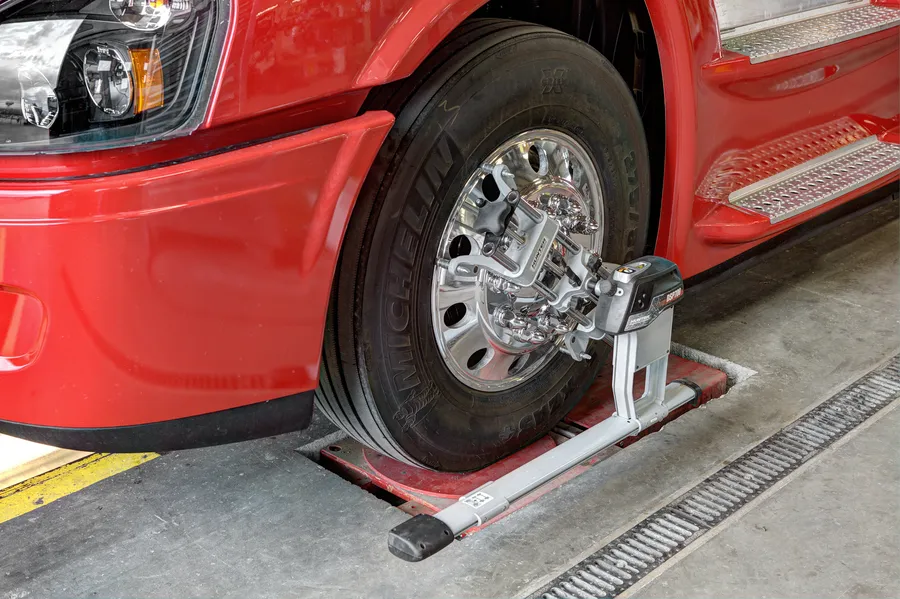
- The car is placed on alignment equipment.
- Measurements are taken for camber, caster, and toe.
- Adjustments are made to bring the angles back into spec.
- The steering wheel is centered.
- A final reading confirms the changes.
- A road test may be done to check steering feel.
Toe is one of the biggest factors in steering response. If the front tires point slightly the wrong way, the car may wander or feel slow to react. Caster also matters because it affects straight-line stability and how the steering wheel returns after a turn. Camber affects tire contact with the road, especially in corners.
Common mistakes to avoid
Many drivers assume poor steering feel means they only need new tires. Others think a quick adjustment will fix every handling issue. That is not always true. Alignment works best when the rest of the system is in good shape.
- Ignoring low tire pressure
- Skipping worn tie rods or ball joints
- Waiting too long after hitting a pothole
- Getting new tires without checking alignment
- Assuming a crooked steering wheel is normal
Another common mistake is waiting until tire wear gets severe. By then, the car may already handle poorly, and the tires may need early replacement.
When to call a professional
Some signs are easy to notice. If your car pulls to one side, the steering wheel sits off center, or the front end feels twitchy, it is smart to get it checked. A professional should also inspect the vehicle if the steering feels too loose or too heavy without an obvious reason.
You should also schedule service after:
- Hitting a curb or pothole hard
- Replacing suspension or steering parts
- Installing new tires
- Noticing uneven tire wear
- Feeling vibration or drift on straight roads
Modern alignment equipment can measure angles very precisely. That helps find small problems that are hard to spot during normal driving.
Final recommendation
Good wheel alignment helps your car respond faster and more smoothly when you steer. It can improve control, reduce tire wear, and make driving feel less tiring. If your vehicle does not track straight or your steering feels off, a proper inspection is a smart next step. Drivers in Oxnard, CA can benefit from checking alignment now and then, especially after rough road impacts or tire changes. If you want help, contact us at (805) 483-2176. Our team at Oxnard Tires and Wheels Number 2 can inspect the steering and suspension, check the angles, and help you get your car feeling steady again.